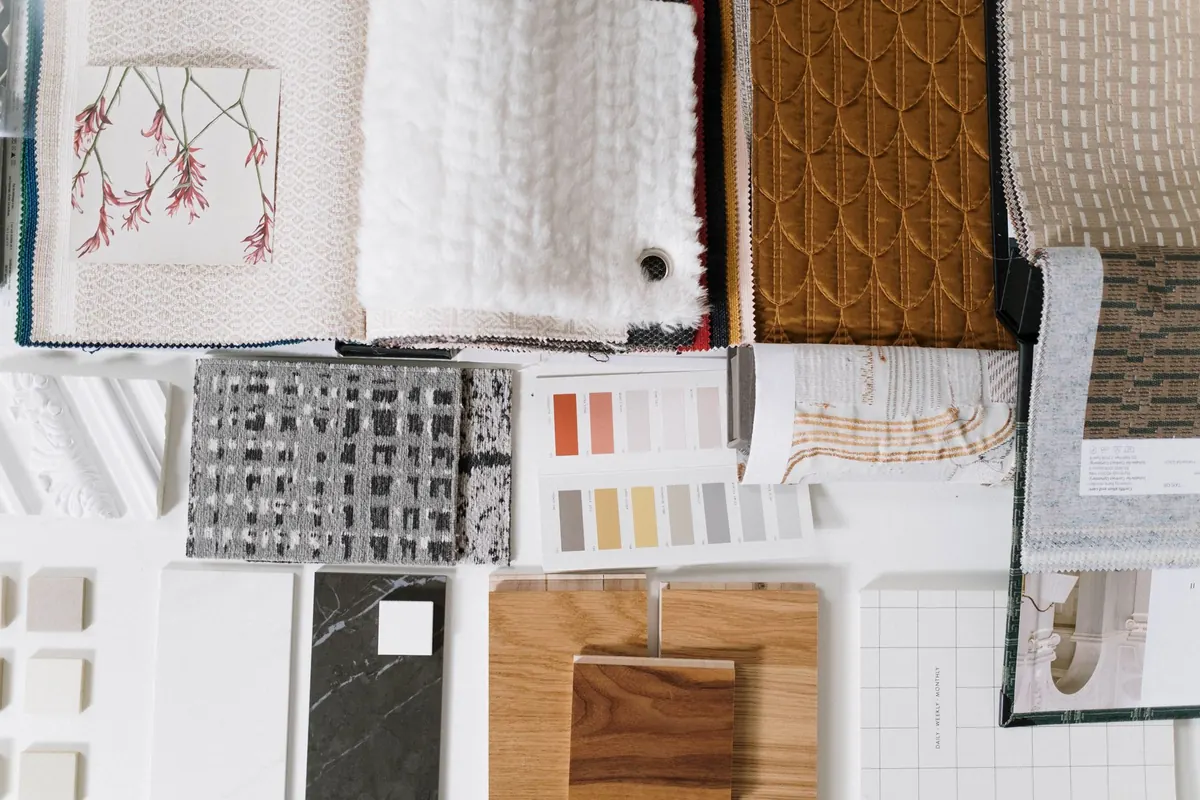
Choosing upholstery fabric is one of the most satisfying parts of a room refresh — and one of the easiest places to get caught out. That beautiful linen that looked perfect in the showroom may pill within months; a velvet that felt divine might fade in a sunlit bay window. Before you commit, run through these eight questions. They will help you choose a fabric that still looks good after years of everyday life.
What Is the Fabric Made Of?
Start with composition. Ask for the exact percentages of wool, cotton, linen, polyester, viscose, acrylic or recycled fibres. Each behaves differently. Wool is naturally resilient and holds colour well, but it can be costly and may felt if cleaned incorrectly. Cotton is breathable and soft, though it can fade and crease. Linen has a lovely casual texture but wrinkles and can be less resistant to abrasion. Polyester and other synthetics are strong, resist fading and clean easily, but some can pill. Blends often balance the best of both: a wool-polyester mix, for example, can be durable and comfortable.
The feel of the fabric matters too. Scrunch a sample in your hand. Does it spring back? Does it feel smooth or rough? A tight weave usually wears better than a loose one. If you have pets or children, a fabric with some synthetic content and a close weave is often more forgiving than a delicate natural fibre. Ask for a sample large enough to see the pattern repeat and to test against your sofa.
Think about where the fabric will live, not just how it looks online. A heavy cotton drill can be brilliant on a kitchen banquette, while a soft wool blend may be better on a reading chair that never sees muddy paws. A slubby linen is charming on a occasional chair, but it may show every pull on a busy family sofa. Composition is the first clue to how the fabric will age.
How Hard-Wearing Is It? Rub Count and Real Life
The rub count, or Martindale result, tells you how many abrasions a fabric can withstand before it shows wear. As a rough guide, domestic furniture often sits in the 20,000 to 30,000 range, while heavier domestic use and contract fabrics go higher. But the number is not the whole story. A high rub count on a loose weave can still snag; a lower rub count on a tight, strong weave may perform beautifully in a quiet bedroom.
Ask about the weave and yarn as well. Flat, tight weaves such as a plain weave or a herringbone tend to resist snagging. Chenille can pill, bouclé can catch on claws and jewellery, and velvets can show pressure marks. If your sofa is the family hub, look for a fabric that has been tested for pilling and snagging, not just abrasion. Here is what to check:
- Martindale rub count suitable for the room and the people using it
- A tight, even weave that does not pull apart when you rub it
- Yarn that does not shed or pill when you rub it against a dark cloth
- Backing or finish that adds stability without making it stiff
Remember that a quiet spare room and a playroom sofa make very different demands. Match the performance to the reality, not to the showroom lighting.
Will It Fade in My Home?
Light fastness is measured on a scale from 1 to 8, with 8 being the most resistant to fading. For a sunny UK room — a south-facing sitting room, a conservatory or anywhere with a skylight — look for a rating of 5 or above. Fading is cumulative, so even a fabric that seems fine for a year can shift after several summers. Ask the supplier for the light fastness rating, and be honest about how much direct sun the furniture will get.
If you love a delicate colour but have a bright window, consider blinds, UV-filtering film or rearranging the layout. Rotate cushions regularly so they fade evenly. Remember that light fastness is different from colourfastness to cleaning; a fabric that resists sunlight may still be tricky to spot-clean.
How Will You Clean It?
This is where many upholstery choices unravel. Ask for the manufacturer's cleaning instructions in writing. You may see codes such as W (water-based cleaner), S (solvent-based cleaner), WS (either) or X (vacuum only). In the UK, always follow the care label that comes with the fabric, as codes can vary between manufacturers and even between colourways. If in doubt, ask whether the fabric has been treated with a stain protector, whether that treatment changes the cleaning code, and whether the warranty is void if you use the wrong product. For families, a washable or WS fabric can be a lifesaver; for formal rooms, S may be perfectly manageable.
Always test a hidden area first, and blot rather than scrub. Keep a note of the cleaning code with your household paperwork, because the label on the sofa may be the only reminder years later.
Will It Snag, Pill or Catch on Claws?
Pilling and snagging are separate problems, and both can make a fabric look tired long before its rub count suggests it should. Pilling happens when loose fibres rub together and form little balls; snagging happens when a thread is pulled by a claw, a zip, a watch strap or a piece of jewellery. If you share your home with a cat or dog, run a sample against a claw-like object and see how it behaves. Smooth, tight weaves generally cope better than loose, textured or looped fabrics.
Also think about what you wear. Denim, velcro and rough wool coats can all abrade upholstery faster than light clothing. If your sofa is where everyone flops down in jeans, a performance weave or a tightly woven blend may be worth the extra cost.
How Does It Feel Through the Seasons?
Comfort is not just about the first touch. Wool and wool blends tend to feel warm in winter and breathe well in summer. Linen and cotton feel cool and fresh, which is lovely in a warm room but can feel thin in a draughty one. Some synthetics are durable and easy to clean, but they can feel clammy against bare skin in hot weather. If the furniture is used year-round, a blend often gives the most balanced feel.
Consider how the room is heated, too. A fabric that feels luxurious in a cool north-facing room may feel heavy in a sun-trap conservatory. Sit on a sample for a few minutes before you decide.
Does the Pattern and Colour Work in Your Room?
Pattern repeat, scale and direction all affect how much fabric you need and how the finished piece will look. A large repeat can require extra metres to match across seams, and a directional pattern may limit how cushions and arms can be cut. Ask whether the fabric is railroaded or has a nap, because velvet and some weaves look different depending on the direction of the pile.
Colour is equally practical. A pale sofa in a busy hallway will show every mark, while a dark, saturated fabric can show dust and lint. Order all the fabric at once and check the dye lot number, because later batches can vary subtly. If you are matching curtains or a rug, compare samples in your own light — morning, afternoon and evening.
What Is the Real Cost and Long-Term Value?
Price per metre is only the beginning. Add the cost of extra fabric for pattern matching, cushion covers, arm caps or future repairs. Reupholstery labour may be charged by the hour or by the piece, and a complicated sofa can take far longer than expected. A cheaper fabric that needs replacing in three years may cost more than a better fabric that lasts a decade.
Ask about the warranty, what it covers, and whether it applies to residential use only. A good supplier will be honest about wear expectations. Value is not the same as the lowest price; it is the cost divided by the years of comfortable use.
The Sample Test: Live With It Before You Commit
Before you order metres, order a generous sample. Tape it to the arm of your sofa, leave it in the sun, rub it with a scarf, press a pet claw into it and see how it recovers. Spill a little water on it and blot it dry. A sample that survives a week of real life is far more reassuring than one that only looked good in a shop.
If a fabric sample cannot survive a week on your sofa, it will not survive five years in your home.
A Final Pre-Order Checklist
- Confirm the composition, rub count and light fastness rating.
- Check the cleaning code and ask for written care instructions.
- Test a sample for pilling, snagging, fading and spill resistance.
- Calculate extra fabric for pattern repeat, cushions and repairs.
- Order all fabric together and keep the dye lot number.
- Ask about warranty, returns and whether the fabric is suitable for your furniture type.
Upholstery fabric is an investment in daily comfort. Ask these questions before you buy, and you will end up with something that looks beautiful on day one — and still feels worth it years later.
Photo: cottonbro studio / Pexels